
When choosing between in-ear vs over-ear headphones, you might find yourself standing in front of a wall of headphone boxes—or a browser tab with fifty open reviews and still not knowing what to buy. Small earbuds that fit in your pocket, or big cushioned cans that sit over your ears. Both promise great sound, and both cost real money. Picking wrong means weeks of regret and a return shipping label..
This guide breaks down the real differences between in-ear and over-ear headphones: sound quality, comfort, isolation, price, and use cases. No filler, no vague claims. Just what you need to choose the right pair for your life.
What Are In-Ear Headphones?
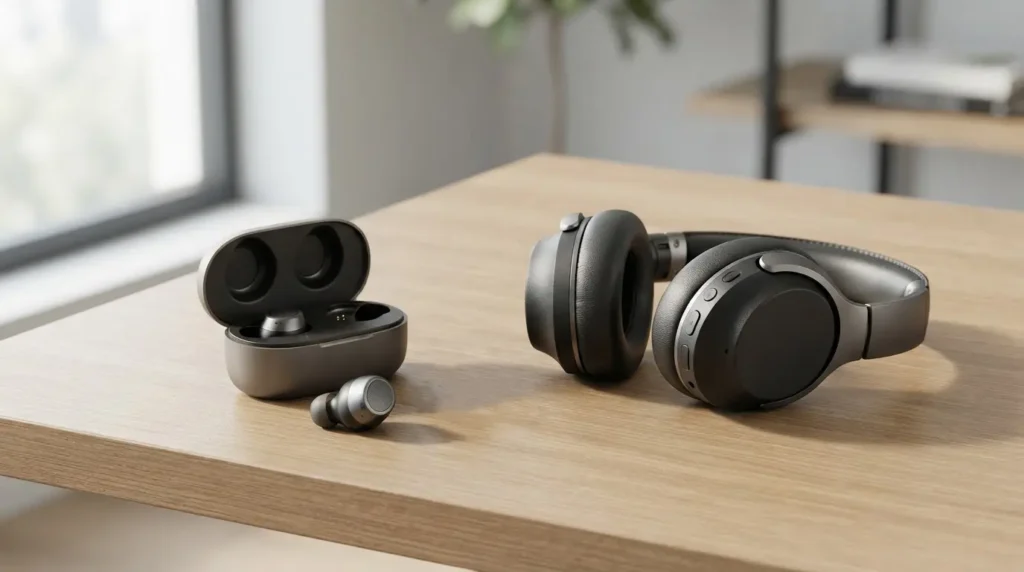
In-ear headphones, also called earbuds or IEMs (in-ear monitors), sit inside your ear canal or rest at its entrance. They are small, light, and often wireless.
Examples include Apple AirPods Pro, Sony WF-1000XM5, and Shure SE215.
Pros of In-Ear Headphones
- Small and portable. You carry them in a pocket or small case.
- Good for workouts and running. They stay in place during movement.
- Many models offer active noise cancellation despite the small size.
- Cheaper entry-level options exist, starting under 20 dollars.
Cons of In-Ear Headphones
- Long listening sessions can cause ear fatigue or soreness.
- Bass response depends heavily on ear tip seal. A bad fit ruins the sound.
- Hygiene matters more since they touch your ear canal directly.
- Battery life on wireless models is shorter than over-ear models, often 4 to 8 hours per charge.
What Are Over-Ear Headphones?
Over-ear headphones, also called circumaural headphones, fully cover your ears with padded cups. A headband holds them in place.
Examples include Sony WH-1000XM5, Bose QuietComfort Ultra, and Sennheiser HD 660S2.
Pros of Over-Ear Headphones
- Larger drivers produce richer bass and clearer detail.
- Padded ear cups reduce pressure during long sessions.
- Better passive noise isolation from the ear cup seal alone.
- Longer battery life on wireless models, often 20 to 60 hours per charge.
Cons of Over-Ear Headphones
- Bulky. They don’t fit in a jeans pocket.
- Uncomfortable in hot weather. Ear cups trap heat.
- Not practical for intense exercise. They can slip or feel heavy.
- Higher average price for models with strong sound quality.

Sound Quality: A Real Comparison
Over-ear headphones generally win on raw sound quality. Bigger drivers move more air. That gives you deeper bass and a wider soundstage, the sense that instruments come from different directions instead of one flat point.
In-ear headphones can still sound excellent. High-end IEMs with balanced armature drivers rival over-ear headphones in clarity and detail. But budget earbuds often sound thin, especially in the low end, unless the ear tip creates a tight seal.
Sound quality also depends on source material and file format. A high-bitrate FLAC file through cheap earbuds can still beat a compressed MP3 through expensive over-ear headphones.
Comfort and Fit
This depends on your ears and your habits.
If you wear glasses, over-ear headphones can press the arms of your glasses into your skull, causing headaches after an hour or two. In-ear headphones avoid this problem entirely.
If you have sensitive ear canals, in-ear headphones can irritate skin or cause a plugged feeling. Over-ear headphones rest outside the ear and avoid direct canal contact.
If you wear headphones for 6 or more hours a day, like during long work shifts, over-ear headphones with memory foam cushions usually cause less fatigue than earbuds.
Noise Isolation and Cancellation
Over-ear headphones isolate sound passively just from the cup seal around your ear. Add active noise cancellation and you get strong isolation for flights, open offices, or noisy commutes.
In-ear headphones need a tight seal from foam or silicone tips to isolate well. A loose tip lets outside noise in and lets your bass leak out. Once sealed properly, small IEMs with ANC, like the Sony WF-1000XM5, isolate nearly as well as over-ear models.
Portability and Daily Use
Earbuds win here without much argument. They fit in a small charging case that slides into a pocket or bag. You can wear them while doing chores, running errands, or exercising without extra bulk.
Over-ear headphones need a bag or a dedicated case. Airline travelers often prefer them anyway because the padded cups make long-haul isolation comfortable, and the bulk isn’t a problem when you’re already carrying a backpack.
“If you are looking for a reliable pair that balances premium sound with comfortable fit, check out our “Studio-Grade Wireless ANC Headphones with Deep Bass” in our store to explore its features and special offers.”
Price Range Breakdown
- Budget in-ear headphones: 10 to 50 dollars. Decent for casual listening, weak bass, no ANC.
- Mid-range in-ear headphones: 100 to 250 dollars. Solid ANC, better drivers, examples like the Sony WF-1000XM5.
- Budget over-ear headphones: 30 to 80 dollars. Comfortable but average sound.
- Mid-range to high-end over-ear headphones: 200 to 400 dollars. Strong ANC and sound quality, examples like the Bose QuietComfort Ultra and Sony WH-1000XM5.
Price alone doesn’t guarantee quality. Read specific model reviews before you buy, since driver quality and tuning vary a lot between brands at the same price point.
Real Scenario: Choosing Headphones for Different Lifestyles
Sarah works from home and takes video calls most of the day. She tried over-ear headphones first. After three hours, her ears felt hot and sore under the padding. She switched to in-ear headphones with a silicone tip and found she could wear them all day without discomfort. For her, in-ear won.
Marcus commutes by train for 90 minutes each way and wants total silence to focus on podcasts. He tried in-ear ANC earbuds, but wind noise on the platform still leaked through. He switched to over-ear headphones with strong ANC and noticed a real difference in isolation during his commute.
Same goal, different bodies and different environments, different answers. That’s the point. There’s no universal winner. There’s only the right fit for your ears, your day, and your budget.

Step-by-Step: In-Ear vs Over-Ear Headphones – How to Choose
- Identify your main use case. Gym, commute, office, travel, or casual home listening. Write down the top one or two activities where you’ll wear headphones most.
- Check your comfort constraints. Do you wear glasses? Do your ears get irritated by silicone tips? Do you overheat easily? These rule out one category fast.
- Set a real budget. Decide what you’re willing to spend before you start browsing, so marketing claims don’t push you past your limit.
- Test the fit if you can. Visit a store and try both types on. A headphone that looks great online can feel wrong on your head within minutes.
- Read reviews from your specific use case. A “best headphones 2026” list won’t tell you how a pair performs on a treadmill. Search for reviews from runners, commuters, or office workers depending on your need.
- Check battery life against your daily habits. If you forget to charge devices often, over-ear headphones with 30-plus hour battery life reduce the risk of running out mid-day.
- Buy from a retailer with an easy return policy. Comfort is personal. Give yourself a safety net in case the fit doesn’t work for your ears.
Safety and Hearing Health Tips
- Keep volume below 85 decibels for extended listening sessions. Many phones show a warning icon when you cross this level.
- Follow the 60/60 rule: 60 percent volume for no more than 60 minutes at a stretch, then give your ears a break.
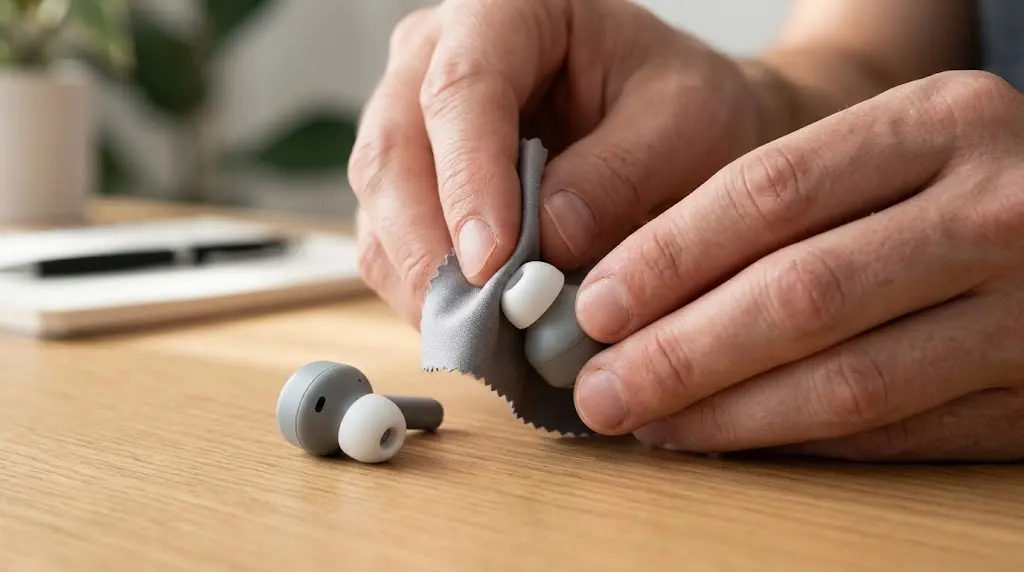
- Clean in-ear tips regularly with a dry cloth to avoid ear infections from wax buildup.
- Avoid sharing in-ear headphones with others without cleaning the tips first, since ear canals carry bacteria.
- If you notice ringing in your ears after a listening session, lower your volume and take a longer break before your next session.
The World Health Organization has published detailed guidance on safe listening practices, worth a look if you listen to headphones daily: WHO Safe Listening.
For a deeper technical breakdown of driver types and how they affect sound, RTINGS runs independent lab testing on both categories: RTINGS Headphone Reviews.
Frequently Asked Questions
Are over-ear headphones always better than in-ear headphones?
No. Over-ear headphones generally offer stronger bass and isolation, but in-ear headphones win on portability, breathability in hot weather, and comfort for glasses wearers. The better choice depends on your use case, not a fixed ranking.
Do in-ear headphones damage your hearing more than over-ear headphones?
Neither type damages hearing on its own. Damage comes from volume level and listening duration, not the headphone type. Since in-ear headphones sit closer to the eardrum, it’s easier to push volume too high without realizing it, so pay closer attention to volume levels with earbuds.
Which type is better for the gym?
In-ear headphones work better for most gym routines because they stay secure during movement and don’t trap heat against your head. Look for models with ear hooks or wingtips for extra stability during high-intensity workouts.
Can I use over-ear headphones for phone calls?
Yes. Most modern over-ear headphones include built-in microphones for calls. Sound quality on calls is usually clear, though in-ear headphones with a mic closer to your mouth sometimes pick up your voice more cleanly in noisy environments.
Do expensive headphones always sound better?
Not always. Price reflects build quality, brand reputation, and features like ANC, but driver tuning varies. A well-tuned 100-dollar pair can outperform a poorly tuned 300-dollar pair. Check independent lab reviews rather than relying on price alone.
How long do headphones typically last before they need replacing?
With regular use, wireless earbuds usually last 2 to 3 years before battery degradation becomes noticeable. Over-ear headphones with replaceable ear cushions and stronger build materials can last 5 years or more with proper care.
Final Thoughts
In-ear headphones fit your pocket and your active life. Over-ear headphones fit your ears with more comfort during long sessions and deliver stronger bass. Match the type to your daily routine, not to what looks trendy in an ad. Test the fit, check the battery life against your habits, and buy from a place that lets you return the pair if it doesn’t work for you.