
If you are wondering how much should you spend on wireless earbuds, you are probably standing in front of a screen with forty tabs open. One pair costs $25, while another costs $300. Both claim “premium sound” and “active noise cancellation,” leaving you unsure which to pick.
Tomorrow becomes next week. You are still using the cracked pair from three years ago, one earbud stuck at 40 percent volume.
You do not need forty tabs. You need a number that fits your ears, your habits, and your wallet. This guide gives you that number, plus the reasoning behind it, so you buy once and stop researching.

What Actually Changed in the Earbuds Market by 2026
Five years ago, price told you almost everything. Cheap earbuds sounded thin and dropped connection in a crowded room. Expensive ones did not. That gap has closed.
Chinese audio brands started shipping consumer earbuds with LDAC and aptX Lossless codec support, features once locked to flagship models. Sony and Anker responded by pushing real engineering down into their budget lines. The result: a pair under 60 dollars can now include active noise cancellation, multipoint Bluetooth, and 30-plus hours of battery.
That does not mean price stopped mattering. It means price now buys you refinement, not basic function. A 30-dollar pair plays music. A 250-dollar pair plays music with tighter bass control, lower latency, and a case that survives a drop onto tile.
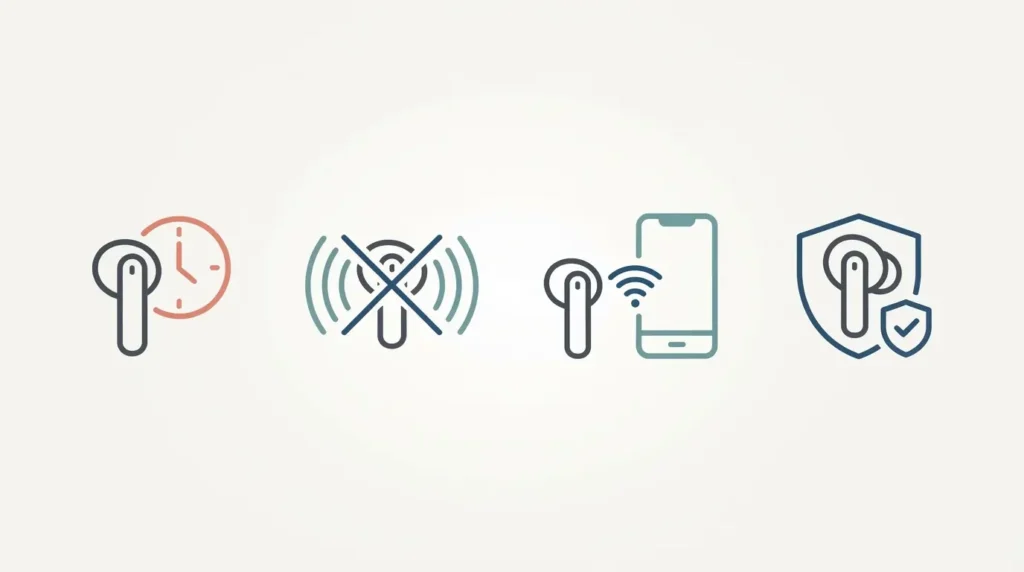
The Four Numbers That Decide Your Budget
Skip the spec sheets for a second. Answer these four questions honestly, and your price range picks itself.
1. How many hours a day do the earbuds stay in your ears?
If you wear them two hours a day for commuting, comfort and battery life matter less than they do for someone who wears them nine hours during a work shift. Long daily use justifies spending more on ear tip comfort and battery capacity, because a bad fit turns into a headache by hour six.
2. Do you need active noise cancellation, or do you want it?
Need means you ride the subway, work in an open office, or fly often. ANC at this level is not a luxury, it is the difference between hearing your podcast and hearing the person next to you on a phone call. Want means quiet rooms most of the time, occasional noise. If you are in the “want” group, you can skip paying for top-tier ANC and put that money elsewhere.
3. What phone or laptop do you pair with?
Apple users get real value from AirPods-style integration: instant pairing, seamless switching between iPhone and Mac, spatial audio tuned for Apple’s ecosystem. Android and Windows users do not get that bonus, so paying the Apple premium for ecosystem features you cannot use is money wasted. Match the brand ecosystem to your actual devices, not to reputation.
4. How rough are you on gear?
Gym use, running, rain, dropped cases. If your last three pairs died from sweat or a fall, spend on IPX-rated durability before you spend on sound signature. A 300-dollar pair with no water resistance loses to a 60-dollar pair with IPX7 the first time you get caught in rain.
Real Price Tiers for 2026, and What You Actually Get
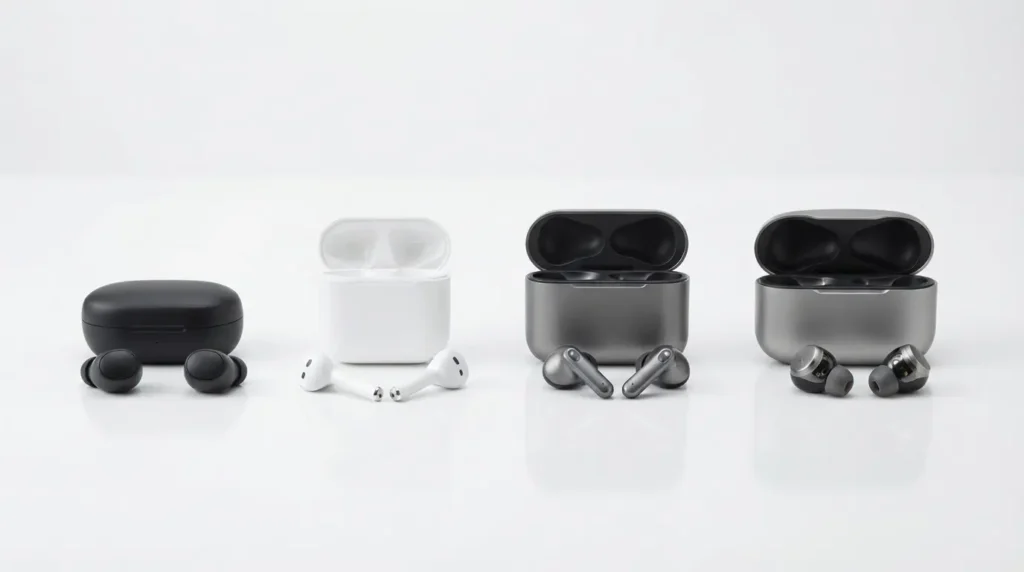
Under 70 dollars: functional, no apology needed
This tier used to mean compromise. Now it means solid daily earbuds with real ANC. The Moondrop Space Travel 2 sells for under 30 dollars and includes active noise cancelling, a rare combination at that price. The Sony WF-C510 holds a similar spot as a trusted budget pick with clean, balanced sound.
Expect 6 to 10 hours of battery per charge, decent call clarity, and noise cancellation that handles a bus ride but struggles with a jet engine. Fine for students, casual listeners, and anyone buying a backup pair.
70 to 150 dollars: the value sweet spot
This is where most people should stop looking. The CMF Buds Pro 2 at 59 dollars and the OnePlus Buds 4 around 110 to 130 dollars sit here, offering hybrid ANC systems, better driver tuning, and app-based EQ controls. The Sony WF-C710N also lands in this range with fun, musical sound tuning that reviewers rate highly for the price.
If you commute daily, work from a noisy apartment, or want earbuds that last two to three years without frustration, this tier delivers the best return per dollar spent.
“Looking for a high-value option that offers active noise cancellation without breaking the bank? Check out our “Foldable Over-Ear Wireless Headphones with Fast Charge” directly in our store for premium sound and reliable daily performance.”
150 to 250 dollars: features that matter for specific use cases
Here you pay for extras: heart rate monitoring for workouts (Powerbeats Pro 2), Samsung ecosystem integration (Galaxy Buds4 Pro at 249 dollars), or noticeably stronger ANC and call quality. This tier makes sense only if one specific feature on the list actually applies to how you live. Buying here for “better sound” alone, without a specific feature need, usually is not worth the jump from the 70 to 150 tier.
250 dollars and up: flagship sound, diminishing returns for casual listeners
The Sony WF-1000XM6 and Technics EAH-AZ100 lead this tier, with reviewers calling the XM6 a new benchmark for sound quality in earbuds. Apple’s AirPods Pro 3 sits here too, built for iPhone users who want spatial audio and health tracking layered on top of ANC.
This tier is for people who can hear the difference and care. If you cannot tell a FLAC file from a compressed MP3 on your current earbuds, you will not notice what the extra 150 dollars buys you here.
A Real Scenario: Picking Between Two Honest Budgets
Here is a case that shows how the decision actually plays out.
A reader wrote in with a simple situation: a 45-minute train commute each way, five days a week, plus gym sessions three times a week. Budget ceiling was 150 dollars. The instinct was to buy the most expensive pair the budget allowed, assuming higher price meant safer choice.
The better move was to work backward from the two real use cases. Commuting demands strong ANC and comfortable long-wear fit. Gym use demands sweat resistance and a secure grip that will not fall out mid-run. Sound quality for casual music listening on a train ranked lower on the list than either of those two.
That pointed toward a pair in the 70 to 150 dollar tier with hybrid ANC and an IPX4 or higher rating, not toward the flagship tier. The extra 100 dollars a flagship pair would have cost bought spatial audio and premium drivers, features that add little value on a noisy train platform. The lesson: list your actual use cases before you look at price tags. The price tag should answer to the use case, not the other way around.
Step-by-Step: How Much Should You Spend on Wireless Earbuds?
- Write down your top two use cases (commute, gym, work calls, gaming, travel).
- Rank ANC importance from 1 to 5 based on how often you are in loud environments.
- Check your phone brand. If Apple, budget an extra 20 to 30 percent for ecosystem features to feel worth it. If Android or mixed devices, skip brand-locked premiums entirely.
- Set a hard ceiling before you start browsing. Write it down somewhere you will see it while shopping.
- Search reviews for your top two use cases specifically, not general “best earbuds” lists. A “best for running” list and a “best overall” list often recommend different pairs for good reason.
- Buy from a retailer with a real return window. Fit varies by ear shape, and no spec sheet tells you if a pair will stay in your ears.
Safe Buying Practices Worth Following
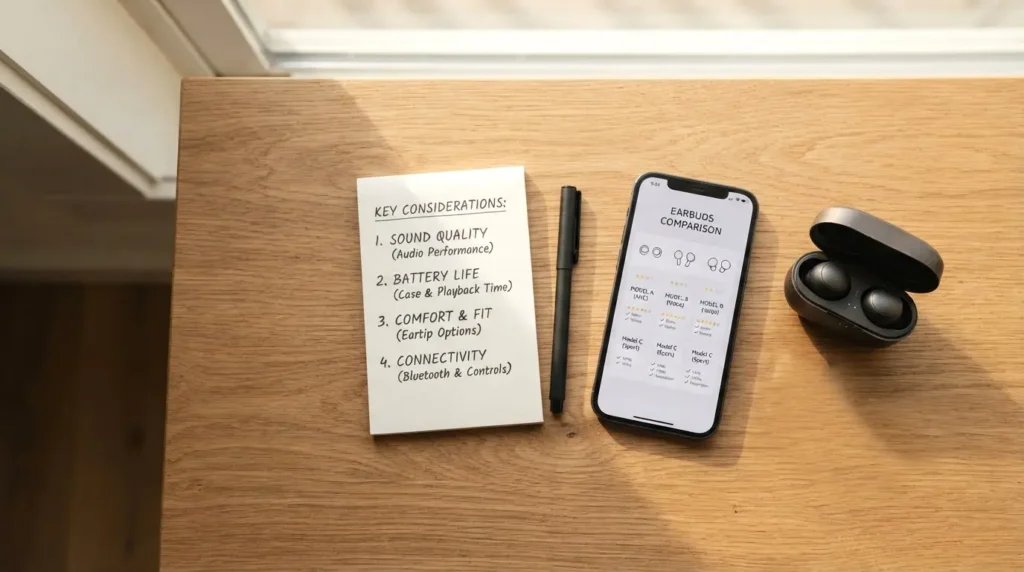
- Buy through the manufacturer’s site or an authorized retailer. Counterfeit earbuds are common in this price range and often ship with fake certification claims for water resistance and ANC.
- Check the return policy before purchase, not after. Fit problems only show up after a few hours of real wear.
- Avoid earbuds with no listed IP rating if you plan any workout or outdoor use. An unlisted rating usually means there is none.
- Register the warranty immediately after purchase. Battery degradation is the most common failure point, and most warranties cover it for one year.
Frequently Asked Questions
Is it worth paying over 250 dollars for wireless earbuds in 2026? Only if you can hear the difference in sound detail and use ANC daily in genuinely loud environments like flights or open offices. For most casual listeners, the 70 to 150 dollar tier delivers 90 percent of the experience at half the cost.
Do cheap earbuds under 70 dollars have good noise cancellation? Some do. The Moondrop Space Travel 2 includes ANC under 30 dollars, and the CMF Buds Pro 2 offers a 50dB hybrid ANC system near 60 dollars. Check for a listed ANC decibel rating rather than trusting the word “noise cancelling” alone, since marketing language varies in what it actually means.
How long should wireless earbuds last before I need to replace them? Two to three years of daily use is realistic before battery capacity drops enough to notice. Battery degradation, not sound quality, is usually what forces a replacement.
Should I buy AirPods if I use an Android phone? Generally no. Most of the premium AirPods experience depends on Apple’s ecosystem for seamless switching and spatial audio tuning. On Android, you lose those features and pay full price anyway. An Android-optimized pair in the same price range will serve you better.
What is the single biggest mistake people make when buying earbuds? Buying based on brand reputation instead of matching features to actual daily use. A flagship pair bought for a quiet home office is money spent on ANC that never gets tested.
Where to Verify Before You Buy
For lab-tested comparisons across every price tier, RTINGS runs detailed measurements on wireless earbuds performance. SoundGuys tracks pricing history and updates its picks monthly at soundguys.com. What Hi-Fi covers tier-by-tier award winners at whathifi.com.
Your ears do not care about the review score on a website. They care about fit, and no article can measure that for you. Read the reviews to narrow the list to three pairs, then buy the one with the best return policy, and let your own ears make the final call.