
Deciding between wired vs wireless earphones can be frustrating when your old pair breaks or dies mid-run. You are standing in an electronics aisle or scrolling Amazon at midnight, asking yourself: which option is actually worth your money?
This guide breaks down both options with real numbers, real trade-offs, and a clear recommendation based on how you actually use earphones. No fluff, no vague claims. Just what works and what doesn’t.
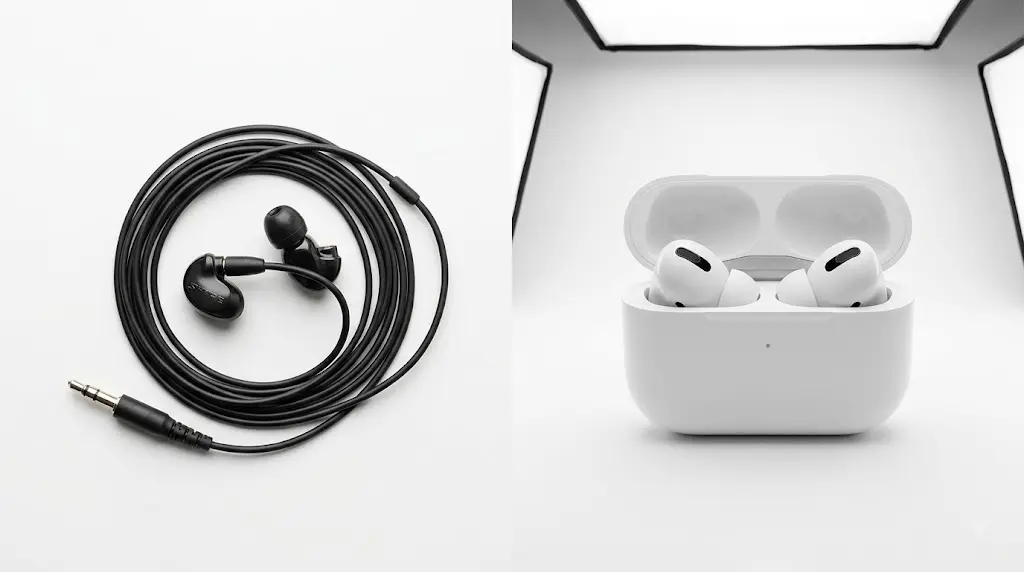
What Are Wired and Wireless Earphones?
Wired earphones connect to your device through a physical cable, usually a 3.5mm jack or USB-C. They pull power and audio signal directly from the source. No battery, no pairing.
Wireless earphones use Bluetooth to send audio from your phone or laptop to the earbuds. They run on a built-in battery and need charging, either in a case or on a dock.
Both types do the same basic job. They put sound in your ears. The difference shows up in sound quality, convenience, price, and how they hold up over years of use.
Wired Earphones: Pros and Cons
Pros of Wired Earphones
Better sound quality per dollar. A $30 wired pair often beats a $30 wireless pair on audio clarity. Wireless earbuds spend part of their budget on batteries, chips, and Bluetooth antennas. Wired earbuds put that money into drivers and sound tuning.
Zero latency. The signal travels through a cable at nearly the speed of light. Bluetooth adds a delay, usually between 100 and 200 milliseconds depending on the codec. Gamers and video editors notice this gap immediately.
No battery to manage. You plug in and play. No charging routine, no dead battery excuse, no anxiety about whether you charged them last night.
Lower cost. Solid wired earphones start around $10 to $20. Wireless earbuds with comparable sound quality often start at $50 and climb fast.
More durable in some ways. No battery means no battery degradation. A wired pair from ten years ago still works today if the cable is intact.
Cons of Wired Earphones
Cable management is a real problem. Cables tangle in your pocket, catch on gym equipment, and snag on doorknobs. Anyone who has yanked an earbud out by accident knows this pain.
Limited compatibility. Many phones dropped the headphone jack years ago. iPhones since the iPhone 7 need an adapter or Lightning/USB-C earphones. This adds friction and another item to lose.
Restricted movement. You are tethered to your device. Running, cooking, or working out means the cable swings and pulls.
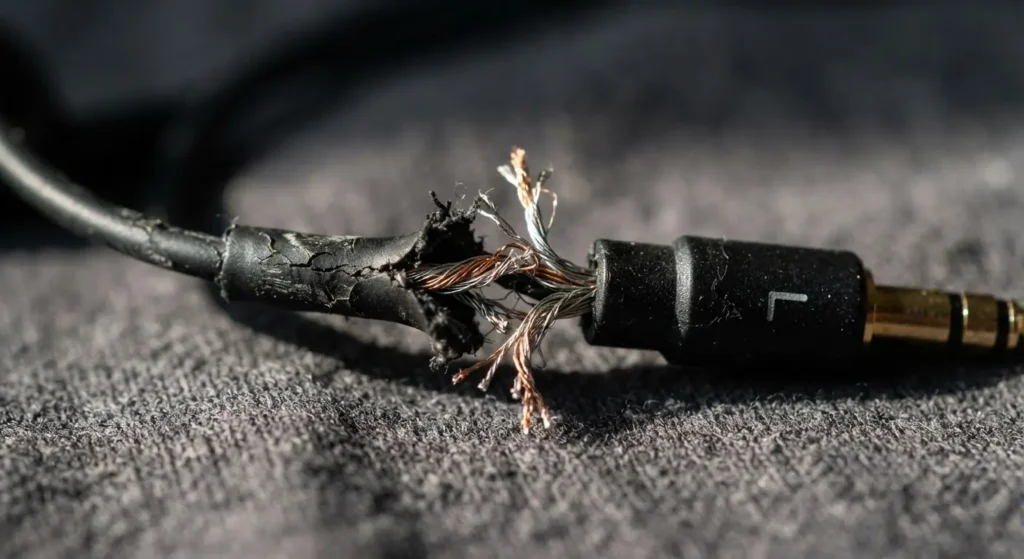
Cable wear. The point where the cable meets the earbud is the most common failure spot. Repeated bending eventually breaks the internal wires, even on well-made pairs.
Wireless Earphones: Pros and Cons
Pros of Wireless Earphones
Freedom of movement. No cable means no restriction. You can run, stretch, or walk across a room without dragging your phone along.
Modern compatibility. Most new phones ship without a headphone jack. Wireless earbuds work with any Bluetooth device without an adapter.
Extra features. Many wireless earbuds include noise cancellation, touch controls, transparency mode, and companion apps for sound customization. Wired earphones rarely offer any of this.
Cleaner daily use. No tangled cables in your bag or pocket. The charging case doubles as storage.
Cons of Wireless Earphones
Battery limits. Most true wireless earbuds run 4 to 8 hours per charge, with the case adding 2 to 4 extra charges. If you forget to charge them, they are useless.
Higher price for equal sound. You pay more to get the same audio quality you would get from a wired pair, because part of the cost covers wireless hardware.
Bluetooth latency. Standard Bluetooth codecs add a lag between video and audio. This shows up as slightly out-of-sync lips in videos or a delay in game sound effects.
Battery degrades over time. Like any rechargeable battery, the one inside your earbuds loses capacity after hundreds of charge cycles. Most earbuds lose meaningful battery life within two to three years, and the battery is not replaceable.
Easy to lose. Small, separate earbuds without a cable connecting them are simple to misplace. One earbud left on a bus seat is a $50 to $150 loss.

Real Scenario: Choosing Between Both
Sara works from home and edits video for a living. She bought wireless earbuds first, expecting convenience. Within a week she noticed the audio in her video previews lagged behind the visuals by a fraction of a second. That gap made it hard to judge sound sync accurately. She switched to a wired pair for editing work and kept the wireless earbuds for calls and walks. Now she uses both, each for the task it handles best.
This pattern repeats across many buyers. The right choice often depends on the specific task, not a single universal answer.
Wired vs Wireless Earphones: Side by Side Comparison
| Factor | Wired Earphones | Wireless Earphones |
| Sound quality per dollar | Higher | Lower |
| Latency | None | 100 to 200 ms typical |
| Battery needed | No | Yes |
| Price range | $10 to $100+ | $30 to $300+ |
| Compatibility | Needs jack or adapter | Works with any Bluetooth device |
| Mobility | Limited by cable | Full freedom |
| Common failure point | Cable near jack | Battery degradation |
| Risk of losing a piece | Low | Higher |
How to Choose: Step by Step
Step 1: Identify your main use case. Gaming, video editing, or music production need low latency. Choose wired. Running, commuting, or gym workouts need mobility. Choose wireless.
Step 2: Check your device compatibility. If your phone has no headphone jack, wireless removes the need for an adapter. If your laptop or console has a 3.5mm jack, wired stays simple.
Step 3: Set your budget. Under $30, wired earphones deliver better sound. Above $100, wireless earbuds close the gap and add features like noise cancellation. If you are looking for a reliable pair, check out our(Secure-Fit Wireless Sports Earbuds with Ear Hooks)for daily workouts and commuting.”
Step 4: Consider how often you will charge them. If you forget to charge devices regularly, wired removes that problem completely.
Step 5: Think about where you lose things. If you have lost earbuds, keys, or small items before, a wired pair connected by a cable is harder to lose piece by piece.
Step 6: Test before committing. Try a friend’s pair or visit a store that allows testing. Latency and comfort are personal and hard to judge from a spec sheet.
Safety Tips for Both Types
- Keep volume under 85 decibels for extended listening sessions to protect your hearing, based on guidance from the World Health Organization.
- Do not use wireless earbuds on both ears while cycling or driving in areas where local law requires situational awareness.
- Clean earbud tips regularly to avoid ear infections from bacteria buildup.
- Store wired cables loosely coiled instead of tightly wrapped to reduce internal wire stress.
- Charge wireless earbuds fully before long trips and avoid letting the battery drop to zero repeatedly, since this speeds up battery wear.
Frequently Asked Questions
Are wired earphones better than wireless for sound quality? At the same price point, yes. Wired earphones spend their full budget on audio components. Wireless earbuds split the budget between audio, battery, and Bluetooth hardware.
Do wireless earbuds cause hearing damage faster than wired ones? No. Hearing damage comes from volume level and listening duration, not the connection type. Both types carry the same risk if played too loud for too long.
Which lasts longer, wired or wireless earphones? Wired earphones often last longer physically since there is no battery to degrade. The most common failure is cable wear near the jack, which some models allow you to repair or replace.
Can I use wireless earbuds for gaming? Yes, but expect noticeable lag with standard Bluetooth. Some gaming-focused wireless earbuds use low-latency modes that reduce delay to around 40 to 60 milliseconds, which is a fair compromise for casual gaming.
Is it worth buying both types? For many people, yes. A budget wired pair for editing, gaming, or backup use, plus a wireless pair for commuting or workouts, covers most situations without a large cost.
How long do wireless earbud batteries actually last? Most true wireless earbuds run 4 to 8 hours per charge, with the charging case providing 2 to 4 additional full charges before you need a wall outlet.
Which One Should You Buy?
If sound quality and zero delay matter most, go wired. If mobility and modern phone compatibility matter most, go wireless. Neither option wins in every category, and the best choice depends on how you plan to use your earphones day to day.
“Looking for your next pair? Explore our curated collection of wireless earbuds and audio gear to find the perfect fit for your budget.”
For further reading on audio latency standards, check the Bluetooth SIG technical overview or compare current models on RTINGS’ headphone reviews.