
You open your parents’ garage and spot an old wood-paneled radio from the 1970s. It still turns on. The knobs click, the fabric grille is faded, and somehow it looks better than anything on your desk right now. That moment is happening to a lot of people this year, and it explains why retro Bluetooth speakers are showing up in living rooms, kitchens, and offices again.
This is not a small niche anymore. Brands like Marshall, Victrola, and Crosley now sell speakers built to look like they came from a 1950s radio or a 1970s stereo console, but they run on Bluetooth 5.0 or newer and charge over USB. You get the look you remember and the wireless streaming you use every day.
This guide walks you through why this trend exists, how to pick a retro speaker that actually sounds good, and how to avoid the common traps buyers run into.
What Are Retro Bluetooth Speakers?
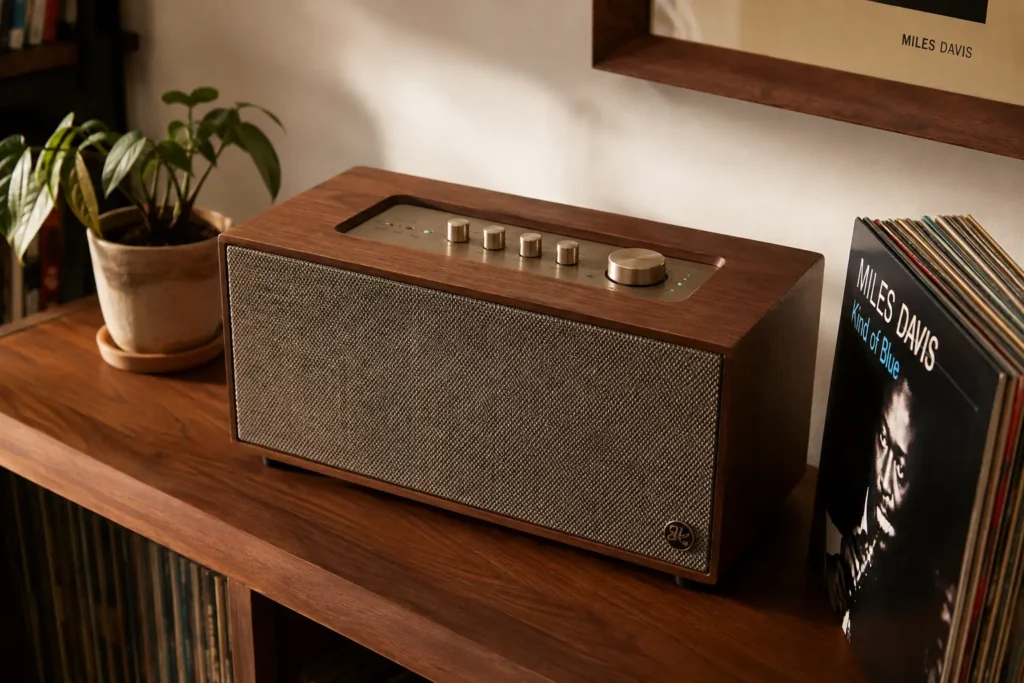
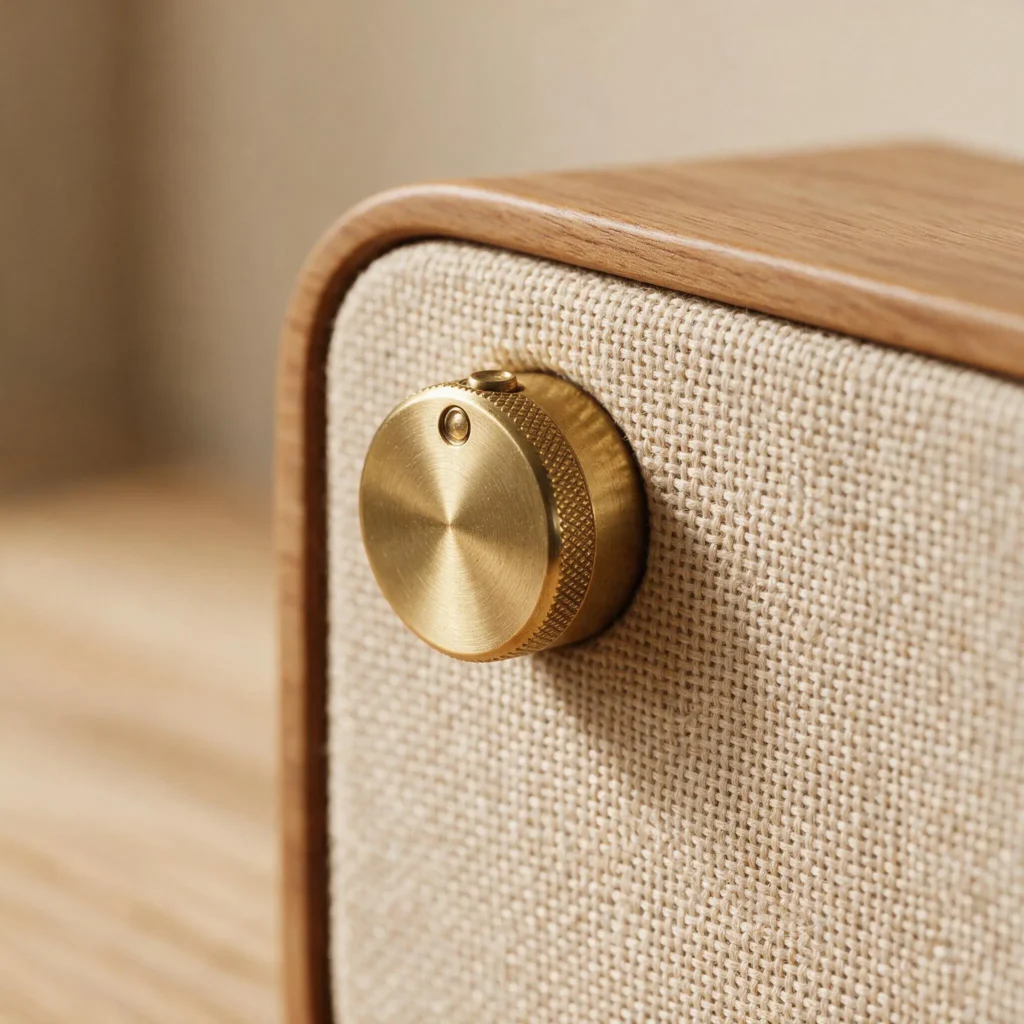
A retro Bluetooth speaker pairs vintage design with modern wireless audio. The outside borrows from radios, record players, and stereo consoles from the 1950s through the 1980s. Wood cabinets, leather trim, brass dials, and fabric speaker grilles are common. The inside runs on the same Bluetooth chips found in any modern speaker.
You get two things at once:
- A physical object that looks like a piece of furniture, not a black plastic puck
- Wireless streaming from your phone, tablet, or laptop, usually with a battery for portable use
Some models add extras from the original era, like an AM/FM tuner or a rotary volume dial that clicks as you turn it.
Why Retro Bluetooth Speakers Are Trending Now
People Want Objects That Feel Real
Most tech in your home is glass and matte plastic. A speaker with a wood cabinet and a tactile knob stands out because it feels different in your hand. Reviewers testing 2026 retro models often mention this directly: the tuning dial on a radio-style speaker clicks as you turn it, and that small detail changes how the product feels compared to a touchscreen interface.
Home Decor Moved Toward Mid-Century Style
Mid-century modern furniture never fully left, and it picked up momentum again over the past few years. A wood speaker with brass accents fits that look far better than a plain black cylinder. For a lot of buyers, the speaker is a decor piece first and an audio device second.
Sound Quality Caught Up
Older retro speakers were often style over substance. That gap closed. Premium retro models now use full-range drivers and passive radiators tuned for warm, room-filling sound, not just a nostalgic shell. The Marshall Acton III, for example, ships with Bluetooth 5.2, a wider stereo soundstage than its predecessor, and a build that leans on recycled and vegan materials rather than new plastic.
Social Feeds Reward Distinctive Objects
A wood-cabinet speaker photographs better than a generic soundbar. On platforms built around visuals, that matters. Retro speakers get shared, tagged, and searched because they look intentional in a photo of a desk, a bookshelf, or a kitchen counter.
Real Examples of the Vintage Speaker Trend
- Marshall Acton III and Stanmore III: Guitar-amp styling with rock heritage branding, aimed at buyers who want serious sound in a recognizable retro shell.
- Victrola Willow: A wood cabinet radio silhouette with a rotary tuning dial, AM/FM support, and Bluetooth streaming built in.
- Crosley Rondo: A suitcase-style portable speaker modeled after vintage record players, built for picnics and travel rather than a fixed shelf spot.
- Klipsch The One Plus: A tabletop radio look aimed at buyers who want a stronger audiophile spec sheet alongside the design.
You will also find budget options under $30 that focus almost entirely on the look. They work fine for casual background music, but do not expect them to fill a living room.
How to Choose a Retro Bluetooth Speaker
Follow these steps in order. Skipping the first two is where most buyers end up disappointed.
- Set your main use case first. A kitchen countertop speaker has different needs than a portable one for the backyard. Decide before you shop.
- Check the driver setup, not just the description. Look for full-range drivers plus a passive radiator or dedicated tweeter and woofer. A single small driver in a big wooden box will sound thin no matter how good the cabinet looks.
- Confirm the Bluetooth version. Bluetooth 5.0 or newer gives you a stable connection and better range. Older 4.x chips drop connections more often, especially through walls.
- Check battery life if you need portability. Aim for at least 8 to 10 hours of continuous playback if you plan to move the speaker around.
- Look for a wired input. A 3.5mm aux jack or USB-C audio input lets you connect directly when you want the cleanest possible sound or when Bluetooth is not an option.
- Read reviews that mention volume announcements and pairing behavior. Some budget models announce “BLUETOOTH MODE” at full volume every time you turn them on. That detail rarely shows up in the product listing.
- Match the finish to your space before you buy. Wood tone, leather trim, and knob color vary a lot between brands. A photo on a white background does not always match your actual room lighting.
Error! Filename not specified.(AI image prompt: A person’s hand holding a smartphone next to a vintage-style wood Bluetooth speaker on a kitchen counter, morning light through a window, natural lifestyle photography, candid feel) Alt text: Pairing a smartphone with a retro Bluetooth speaker in a kitchen
A Real Scenario: Buying for a Small Apartment
Say you live in a one-bedroom apartment and want one speaker for your kitchen and living room. You do not need a huge console speaker, and you do not need pure portability either, since it mostly sits in one spot.
In that case, a mid-size tabletop retro speaker, something in the Marshall Acton or Victrola Willow range, covers both rooms if you move it occasionally. Buyers in this situation get more value from a plug-in unit with strong drivers than from a battery-powered mini speaker, since sound quality per dollar is usually better once you remove the battery and portability costs from the price.
If your apartment has thin walls, check reviews for bass performance at higher volumes specifically. A speaker praised for “great bass in small spaces” is a better fit than one marketed mainly on maximum loudness.
Safe Buying Tips
- Buy from the manufacturer’s site or a major retailer. Marketplace listings with no brand name attached are a common source of counterfeit or mislabeled units.
- Check the return policy before you buy. Sound quality is subjective and hard to judge from photos, so a return window protects you.
- Avoid speakers with no listed driver specs. If a product page only shows the wood finish and skips wattage, driver size, and Bluetooth version, treat that as a warning sign.
- Verify the charging method. Older retro-styled units sometimes still use micro-USB instead of USB-C, which limits which cables and chargers you can use.
- Confirm warranty coverage in your country. Some import-only retro brands do not offer local warranty support, which matters if the unit fails after a few months.
FAQ
Are retro Bluetooth speakers as good as modern minimalist speakers? Sound quality depends on the drivers inside, not the outside design. Premium retro models from Marshall or Klipsch compete directly with modern speakers in the same price range. Budget retro speakers under $30 usually prioritize looks over sound.
Do retro Bluetooth speakers need special cables? No. Most use standard USB-C charging and connect wirelessly like any other Bluetooth speaker. Some older-style models still use micro-USB, so check the spec sheet before you buy.
Can I use a retro Bluetooth speaker outdoors? Some models are weather-resistant, but many retro speakers use wood or fabric grilles that are not built for rain or direct sun exposure. Check the IP rating if outdoor use matters to you.
Why do some retro speakers have an AM/FM radio built in? This feature matches the original devices they are styled after, like tabletop radios from the 1950s and 60s. It also gives you a backup listening option when you do not want to use Bluetooth.
Is Bluetooth 5.0 good enough for a retro speaker? Yes. Bluetooth 5.0 and newer versions give you a stable connection, low latency, and solid range for home use. Anything below 4.2 is worth avoiding.
Final Thoughts
The vintage speaker trend works because it solves two problems at once. You get a piece of decor that looks intentional in your space, and you get modern wireless streaming that works the same way any other Bluetooth speaker does. Focus on the driver setup and Bluetooth version first, then choose the finish that matches your room. The look should be the reason you pick one model over another, not the reason you ignore how it actually sounds.
Error! Filename not specified.(AI image prompt: Cozy living room shelf styled with a vintage wood Bluetooth speaker, stacked books, and a small warm lamp, evening ambiance, soft shadows, realistic interior photography) Alt text: Retro Bluetooth speaker styled on a living room shelf
External resources for further reading: