
You know the feeling. You hit mile two, your playlist is finally hitting its stride, and one earbud shoots out of your ear and lands somewhere on the pavement. Or worse, you finish a sweaty gym session and your left bud stops responding the next morning. Sweat killed it.
This happens to more runners and gym goers than you think. Regular earbuds are not built for motion, humidity, or salt. Sports earbuds are a different category. They are built to survive drops, sweat, rain, and hard motion without failing on you.
If you’re searching for the best wireless earbuds for running and working out, this guide walks you through the top sweatproof picks worth your money in 2026. You can also check our full wireless earbuds collection to find the latest deals.

Why Regular Earbuds Fail During Workouts
Standard earbuds are sealed for daily use, not for hard motion and sweat exposure. Three things break them fast:
- Sweat enters the charging port or speaker mesh and corrodes the internal circuit
- The fit loosens with jaw movement, head turns, and impact from running strides
- Heat and moisture combine and damage the battery over repeated sessions
A sports earbud fixes these problems with a sealed design, a rating for water and sweat resistance, and a shape built to lock into your ear canal or ear ridge.
What an IPX Rating Actually Means
You will see ratings like IPX4, IPX5, and IPX7 on every product page. Here is what they mean in plain terms:
- IPX4: Resists sweat and light rain splashes. Fine for gym sessions and dry-weather runs.
- IPX5: Resists a steady stream of water. Good for heavy sweating and rain. <br>
- IPX7: Survives full submersion in water up to one meter for 30 minutes. Best for wet climates, heavy rain runs, or if you rinse your earbuds under a tap after a session.
If you train outdoors in a hot, humid climate, aim for IPX5 or higher. If you train indoors in a climate-controlled gym, IPX4 covers you.
How to Choose the Right Pair for Your Sport
Not every sport needs the same earbud. Your movement pattern decides the fit you need.
Running (Road or Trail)
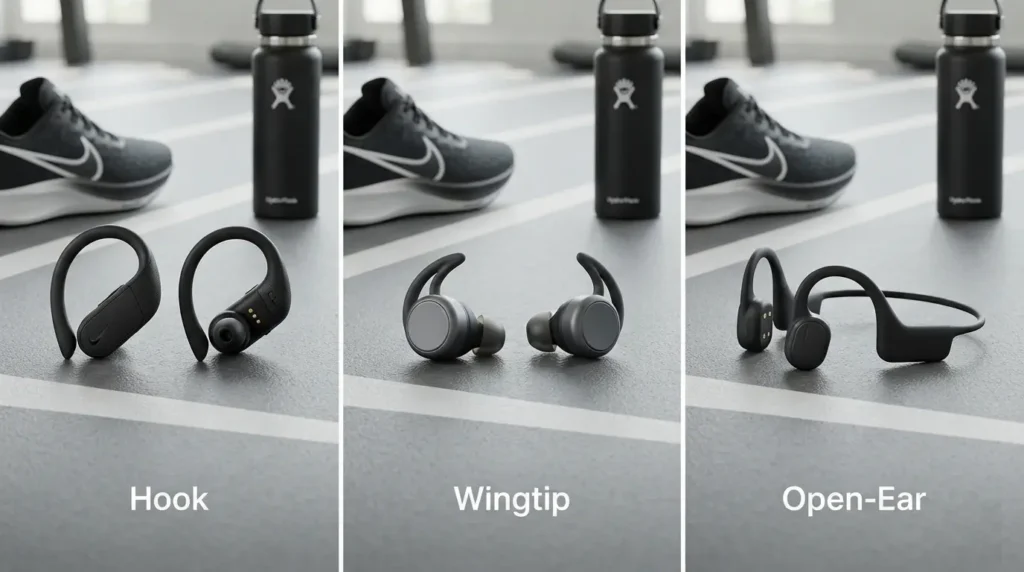
Runners need a locked fit that survives foot strike impact and head bounce. Look for ear hooks, wingtips, or a stem shape that presses against the ear ridge. A loose in-ear bud will work its way out by mile three.
Gym and Weightlifting
Lifters move their head less than runners, so fit is less critical. Battery life and comfort under a lifting cap or headband matter more here.
HIIT and CrossFit
This is the hardest test for any earbud. Jumping, sprinting, and rapid direction changes shake earbuds loose faster than steady-state cardio. Choose the same locked-fit style you would pick for running.
Cycling and Outdoor Sports
Safety comes first. Pick a pair with a strong transparency or awareness mode so you hear traffic, other riders, or runners around you. Never run or cycle with full noise cancellation blocking outside sound near roads.
Best Wireless Earbuds for Running and Working Out
Here are the picks worth your money right now, based on fit security, water resistance, and battery life under real training conditions.
1. Apple AirPods Pro 2 (Best Overall for iPhone Users)
Custom silicone tips grip the ear canal well, and the fit holds through sprints and direction changes. Rated IPX4, so it handles sweat and light rain but skip the pool. Adaptive Transparency mode lets you hear traffic and other people around you during outdoor runs. Battery lasts around 6 hours per charge with the case adding several more.
Best for: iPhone users who want a locked fit and strong noise control on rest days.
2. Samsung Galaxy Buds 3 Pro (Best for Android Runners)
A blade-style antenna design that sits along the ear helps stabilize the bud during motion. Rated IPX7, so it handles heavy rain, sweat, and even a rinse under water. Pairs fast with Android phones and includes a solid ambient sound mode for road running.
Best for: Android users who train in wet or humid climates.
3. Beats Fit Pro (Best Secure Fit for High-Impact Training)
The wingtip design physically locks into the ear ridge, which makes this pair one of the most secure options for CrossFit, HIIT, and sprint training. Rated IPX4. Includes real buttons instead of touch controls, which helps when your fingers are sweaty mid-set.
Best for: HIIT, CrossFit, and any workout with jumping or rapid head movement.
4. Shokz OpenFit Air (Best for Outdoor Safety)
An open-ear design that sits above the ear canal rather than inside it. Your ears stay fully open to traffic, other runners, and cyclists around you. Comfortable for long runs since nothing sits inside the ear canal. Water resistance covers sweat and rain, though this pair is not built for submersion.
Best for: Road runners and cyclists who train near traffic and want full situational awareness.
5. JBL Endurance Race 2 (Best Budget Pick)
A lightweight, affordable pair rated for sweat and rain resistance, with a battery life that covers long runs and extends further with the case. Sound quality will not compete with premium picks, but the fit holds and the price makes it easy to replace if lost.
Best for: Runners who want a reliable pair without a premium price tag.
A Real Training Scenario
A recreational runner training for a half marathon switched from standard earbuds to a wingtip-style sports pair after losing three sessions to buds falling out mid-stride. The new pair survived a full training block of speed workouts, tempo runs, and one accidental machine wash of a running jacket pocket that still had one earbud tucked inside. The bud kept working. That is the real test: not the spec sheet, but whether the earbud survives your actual training mistakes.
This is common. Most runners do not lose earbuds to failure. They lose them to fit. Spend the extra few minutes trying different ear tip sizes before your first run. A tip that feels fine standing still often loosens once your jaw starts moving and your stride hits the ground.
Steps to Get the Most Life Out of Your Sports Earbuds
Follow these steps after every sweaty session to extend the life of your earbuds:
- Wipe both earbuds and the charging case with a dry microfiber cloth right after your workout.
- Let the earbuds air dry for 10 to 15 minutes before placing them back in the case. Sealing in moisture speeds up corrosion.
- Check the charging pins on the case weekly and wipe away any sweat residue or dust buildup.
- Never store wet earbuds in a closed gym bag pocket overnight. Trapped moisture is the top cause of early failure.
- Replace ear tips every 3 to 6 months if you train daily. Worn silicone loses grip and your fit suffers.
Common Mistakes That Kill Sports Earbuds Fast
- Charging the case while it is still damp from sweat
- Ignoring the IPX rating and swimming with earbuds rated for sweat only
- Skipping the fit test before a race or long run
- Storing earbuds in direct sunlight inside a hot car
- Using the wrong tip size, which forces the earbud to sit loose and vibrate free during motion
Frequently Asked Questions
Can I swim with sweatproof running earbuds?
Only if the pair is rated IPX7 or IPX8 and the manufacturer states it supports water submersion. Most sweatproof earbuds rated IPX4 or IPX5 handle sweat and rain but fail underwater. Check the product listing before swimming.
How long do sports earbuds last before they need replacing?
With proper care, most sports earbuds run for 2 to 3 years before battery capacity drops noticeably. Heavy daily use in sweat and heat shortens this. Wiping down your earbuds after every session extends their working life.
Do open-ear earbuds work for running?
Yes. Open-ear designs like the Shokz OpenFit Air sit above the ear canal and stay secure during running while keeping your hearing open to traffic and surroundings. They trade some bass depth for safety and comfort on long runs.
What water resistance rating do I need for a hot, humid climate?
Aim for IPX5 or higher if you train outdoors in high heat and humidity. Heavy sweat output during summer training puts more stress on a device than most people expect.
Should I choose in-ear or open-ear earbuds for outdoor running near roads?
Open-ear or a transparency mode with strong ambient sound pickup keeps you aware of traffic and cyclists. Full noise cancellation blocks warning sounds and raises your risk near roads.
Are cheap sports earbuds worth buying?
A budget pair with a confirmed IPX rating and a secure fit works well for casual training. Spend more only if you want longer battery life, richer sound, or premium noise control features.
Final Thoughts
The right pair of sports earbuds comes down to three things: a fit that survives your specific movement pattern, a water resistance rating that matches your training environment, and a habit of drying and storing them correctly after every session. Get those three right, and your earbuds will outlast your running shoes.
Try on a few tip sizes, test the shake test at home before your first outdoor run, and pick the rating that fits your climate. Your workout playlist deserves gear that keeps up.
Further reading:
- Consumer Reports lab tests on workout earbuds: https://www.consumerreports.org/electronics-computers/headphones/great-workout-headphones-a3872213009/
- Tom’s Guide running headphones roundup: https://www.tomsguide.com/uk/best-picks/best-running-headphones
- What Hi-Fi sweatproof sports earbuds guide: https://www.whathifi.com/hi-fi/going-for-a-run-weve-rounded-up-some-of-the-best-snug-fitting-sweatproof-sports-earbuds-to-accompany-you