
Welcome to our ultimate Waterproof Bluetooth Speaker Buying Guide. Your speaker survives one splash at a backyard party, then dies after a single wave at the beach. Sound familiar? Most people blame bad luck, but the real problem is an IPX rating nobody bothered to read.
This guide breaks down what those letters and digits mean, which rating fits your daily routine, and how to avoid paying for “waterproof” protection your speaker never had.
If you’re also looking to keep your earbud battery in top shape, check out our guide on how to extend the battery life of your wireless earbuds.“
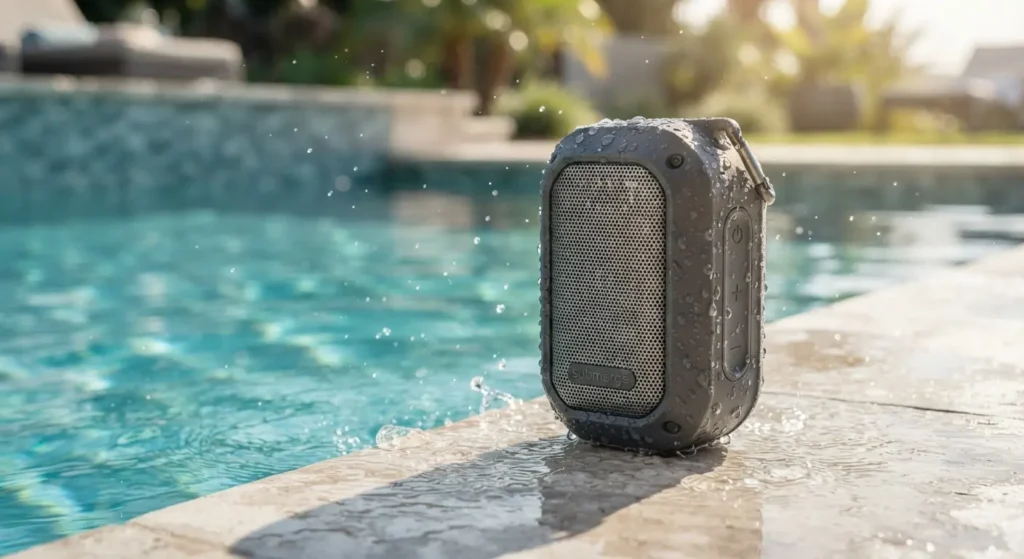
What an IP Rating Actually Tells You
“Waterproof” on a product page means nothing on its own. No agency checks that word before a brand prints it. An IP rating is different. IP stands for Ingress Protection, and the rating comes from IEC 60529, an international testing standard that manufacturers use to prove how well a sealed enclosure keeps out dust and water.
The code looks like this: IP, followed by two characters. The first digit covers protection against solid particles, on a scale from 0 to 6. The second digit covers protection against liquids, on a scale from 0 to 8 (with a rare 9K tier for industrial gear). When you see an X instead of a number, such as IPX7, the manufacturer skipped that specific test. An X does not mean zero protection. It means untested, which is a different thing entirely.
For Bluetooth speakers, the water number (the second digit) matters most, since dust rarely destroys a speaker the way water does.
How to Read an IPX Code, Digit by Digit
Here is the water resistance scale you will run into while shopping:
IPX0: No protection. Avoid this for anything used outside.
IPX3: Handles light rain and splashes from above at an angle.
IPX4: Handles sweat, splashes from any direction, and brief drizzle. Fine for a jogger or a kitchen counter.
IPX5: Survives low pressure water jets from any angle. Good for rain on a patio or a hose rinse.
IPX6: Survives powerful water jets. Built for a boat deck or a job site.
IPX7: Survives full submersion up to 1 meter deep for 30 minutes. This covers a drop in the pool, a dunk in the sink, or a spill in the shower.
IPX8: Survives submersion beyond 1 meter, with the exact depth set by the manufacturer, not the standard itself. This is the rating you want for swimming or snorkeling with music.
IPX9K: Withstands high pressure, high temperature spray at close range. Almost never shows up on consumer audio gear.
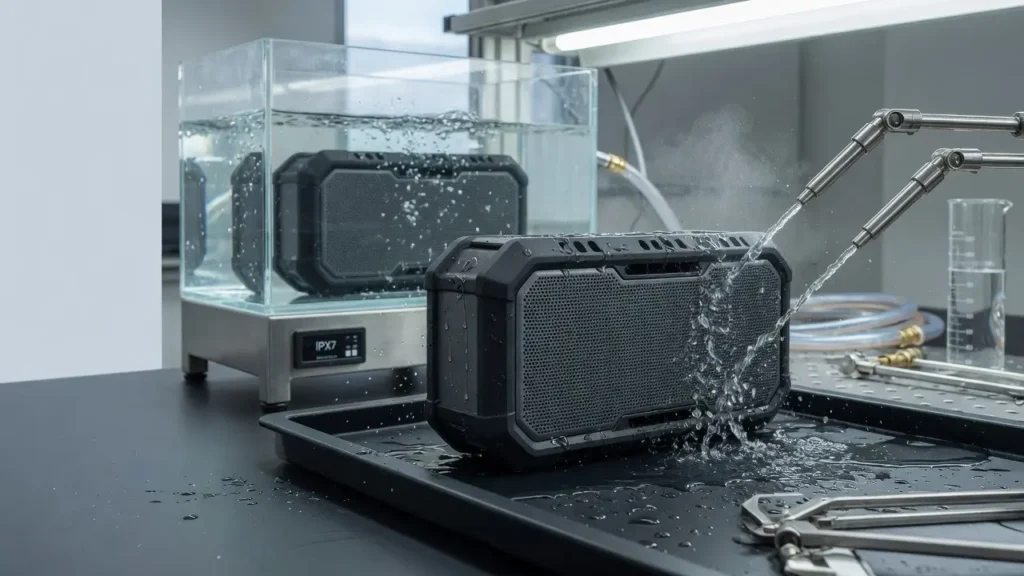
IPX7 vs IPX8: The Mix-Up That Costs People Money
Buyers assume IPX8 is only a slightly better version of IPX7. It is not, and the gap changes what you should buy.
IPX7 covers a specific test: 1 meter deep, 30 minutes, then normal function afterward. IPX8 has no fixed depth in the standard. Each brand sets its own submersion depth and duration, so one IPX8 speaker might survive 1.5 meters and another might survive 3 meters. Always check the product manual or spec sheet for the exact number instead of trusting the label alone.
There is a second detail most shoppers miss: IPX7 and IPX8 do not automatically cover the lower ratings, like resistance to angled jets or heavy rain. A speaker built and sealed for deep submersion can still let water in through a seam if hit by a jet from the side. Brands that tested for both list a dual rating, something like IPX6/IPX8. If you see only one number, ask the manufacturer whether the lower-pressure scenarios were tested too.
Waterproof Bluetooth Speaker Buying Guide: 5 Practical Steps Before You Buy
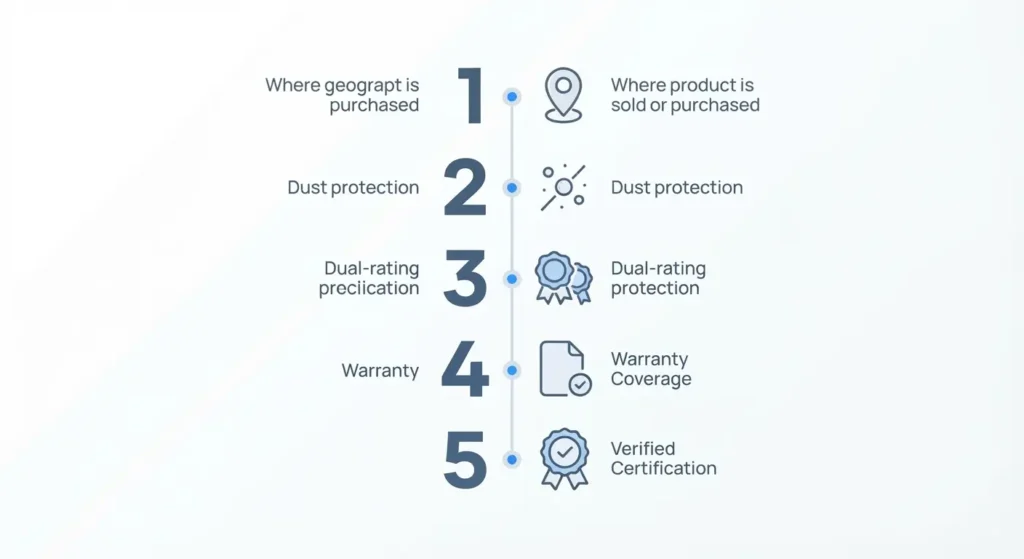
Step 1: Match the rating to where you will actually use it
Be honest about your routine. Someone who keeps a speaker on the kitchen counter and near a shower door needs IPX4 or IPX5 at minimum. Someone who takes a speaker into the pool or drops it off a kayak needs IPX7 or IPX8. Buying more protection than you need is not a problem. Buying less is what leads to a dead speaker.
Step 2: Check the dust rating too, not just the water rating
If the listing shows a full IP code like IP67, the first digit protects against sand and dust, which matters a lot at the beach or on a hiking trail. A speaker rated only IPX7 might handle a swim fine and still jam up after a day on sandy ground.
Step 3: Look for a dual rating on speakers meant for rough outdoor use
As covered above, a dual rating (IPX6/IPX8, for example) tells you the speaker survived both a direct jet test and a submersion test. Single-scenario protection leaves gaps for anyone who uses a speaker in more than one environment.
Step 4: Read the warranty terms for water damage
An IP rating from the manufacturer is not the same as a legal guarantee against water damage. Some brands exclude water damage from warranty coverage even on a rated product, especially past a certain age or number of exposures. Check this before you buy, not after the speaker stops turning on.
Step 5: Confirm the rating came from real testing, not marketing copy
IP testing needs sealed chambers, timed submersion, and jet pressure equipment. Reputable brands submit products to accredited labs. Smaller or unfamiliar sellers sometimes print an IPX rating without third party verification. A quick search for the brand name plus “IP rating certification” or “IEC 60529 test report” tells you whether independent testing backs the claim.
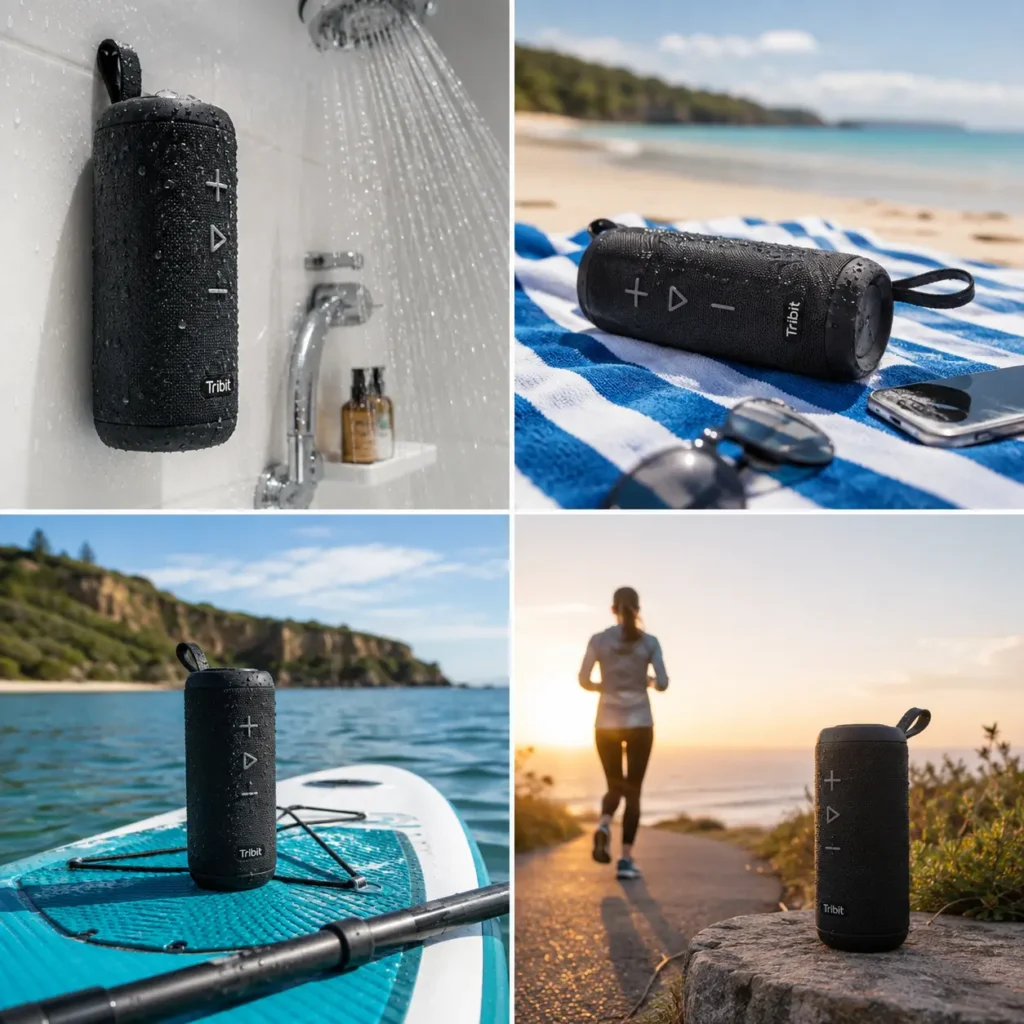
Real Scenarios: Matching the Rating to Your Life
The shower speaker. Steam, direct spray from a showerhead, and the occasional bar of soap knocking it into the tub. IPX7 handles this without stress. IPX4 survives steam but will not survive a drop into standing water.
The beach and pool day. Sand, sunscreen, splashes, and the near-certain chance someone tosses it in the pool. Go for IP67 or higher, since sand exposure needs the dust digit covered too.
The boat or paddleboard trip. Direct spray from waves, occasional full dunks if the board flips, and constant humidity. A dual rating like IPX6/IPX8 fits this better than a single IPX7 speaker, since wave spray at an angle is a different stress test than a calm pool drop.
The jogger or gym user. Sweat and light rain are the main threats, not submersion. IPX4 or IPX5 covers this without paying extra for submersion protection you will never use.
For workouts, you might also want to check our top picks for the best wireless earbuds for running.”
A Note From Testing These Speakers Over Time
Speakers rated for submersion still fail early in one common way: the charging port door. Owners open it to plug in a cable, forget to snap it shut fully, then take the speaker into the water anyway. The rating protects a sealed unit, not one with an open port. Before any dunk, press every port cover down and listen or feel for the click. This single habit prevents more water damage than upgrading from IPX6 to IPX7 ever will.
The second habit worth building: rinse a speaker with fresh water after ocean or pool use, then let it air dry fully before charging. Salt and chlorine residue wear down seals faster than plain water exposure does, even on a well-rated device.
Common Mistakes to Avoid
Do not assume “water-resistant” and “waterproof” mean the same protection level. Resistant products handle splashes only.
Do not submerge an IPX6 speaker expecting IPX7 or IPX8 results. The rating only covers what was tested.
Do not charge a speaker while it is wet, even if the port is covered. Dry it fully first.
Do not skip the manual. The exact submersion depth for IPX8 products lives in the spec sheet, not on the front of the box.
Do not buy based on the word “waterproof” alone when no IP code appears anywhere in the listing. That is a marketing claim with nothing behind it.
Frequently Asked Questions
Is IPX7 enough for swimming? Yes, for casual use. IPX7 covers a 1 meter, 30 minute submersion, which handles drops in the pool and short dunks while swimming. For longer swim sessions or open water, IPX8 gives more margin.
Can I use an IPX4 speaker in the shower? IPX4 handles splashes and steam, so light shower use works. Avoid setting it somewhere it could fall into standing water, since IPX4 was not tested for submersion.
Does a higher IP number always mean a better speaker? No. The IP rating only measures dust and water protection, not sound quality, battery life, or build durability against drops. Check those specs separately.
What happens if I exceed the tested depth or time for my rating? Water resistance drops off past the tested limit. A speaker rated for 1 meter and 30 minutes was not tested at 2 meters or for an hour, so damage becomes more likely the further you go past the rated numbers.
Do all waterproof speakers float? No. Floating is a separate design feature, not part of any IP rating. Check the product description directly if flotation matters for your use case, since a submersible speaker can still sink.
Is a self-certified IP rating trustworthy? Treat it with more caution than a lab-verified rating. Established brands typically submit products for independent IEC 60529 testing. Smaller sellers sometimes list a rating without third party verification, so a quick check on the brand’s testing documentation is worth the extra two minutes.